




Understanding Deck Costs in Quebec: What to Expect in 2026
Picture this. A homeowner in Laval sketches a 14×20 deck on a napkin, calls two contractors, then freezes when the quotes come back miles apart. The first instinct is to blame material prices, but that only tells part of the story. Deck cost in Quebec stacks up from many places at once. Materials, sure, but also skilled labor, the substructure you never see, permits, and the long-term maintenance that keeps the space looking sharp. If you only look at sticker price, you miss the real deck building costs.
Here is the quick reality check for 2026. In Quebec, total pricing typically spans from $10,000 for an entry platform to $100,000+ for a large, premium build. And the money does not just go to boards. Across typical projects, materials run about 20% to 30% of the total, labor lands around 30% to 40%, and the substructure and foundation carry 35% to 40%. Add-ons and custom features sit on top. That is why two projects with the same square footage can have very different totals. A solid deck construction estimate looks at everything, not only the deck cost per square foot.
This guide pulls together Quebec-specific pricing for 2026 so you can plan with confidence. We cover budget-friendly builds, balanced mid-range projects, and high-end outdoor rooms. You will see what drives the average deck cost here, how climate affects foundations, and how local rules shape design. Quebec follows the provincial construction code overseen by the Régie du bâtiment du Québec (RBQ), and municipalities set permits and inspections. Winter frost, deep footings, and seasonal demand all play into final pricing.
- Materials: wood, composite, and PVC each change upfront price and long-term upkeep.
- Labor rates: vary by region, contractor experience, and season. Spring is often busier, which usually raises bids.
- Design complexity: stairs, multi-level layouts, custom railing, and patterns boost hours and hardware.
- Hidden and soft costs: permits, inspections, site prep, demolition, and utility runs can surprise budgets.
Quebec is a unique market. The freeze-thaw cycle often calls for deeper footings or engineered options. Access on tight urban lots slows work. Rural builds might need longer runs for electrical or gas. And contractor availability swings through the year, which affects quotes. We track these realities so the numbers you see here reflect how people actually build in this province in 2026, not generic estimates from elsewhere.
As you read, you will get clear ranges by size and tier, not just one average. You will also see why a strong substructure budget prevents headaches later. If you want multiple competitive quotes to cross-check labor and schedules, Compare Deck Builders can help you line up vetted pros without spending your weekends chasing callbacks. That way your deck construction estimate aligns with the market before you commit.
By the end, you will be able to build a realistic budget, compare material options side by side, and see exactly where your money goes on a deck project. You will understand how materials, labor, and framing share the pie, and how features shift totals above or below the headline price. Most important, you will know what a reasonable deck cost looks like for your home in Quebec in 2026, so you can choose with confidence and avoid the costly surprises.
If you only look at board prices, deck cost math feels simple. Then the real bill shows up. In Quebec, your money spreads across materials, labor, a hefty substructure, permits, plus a few sneaky line items you do not expect. This section breaks that down so you can see exactly where each dollar goes.
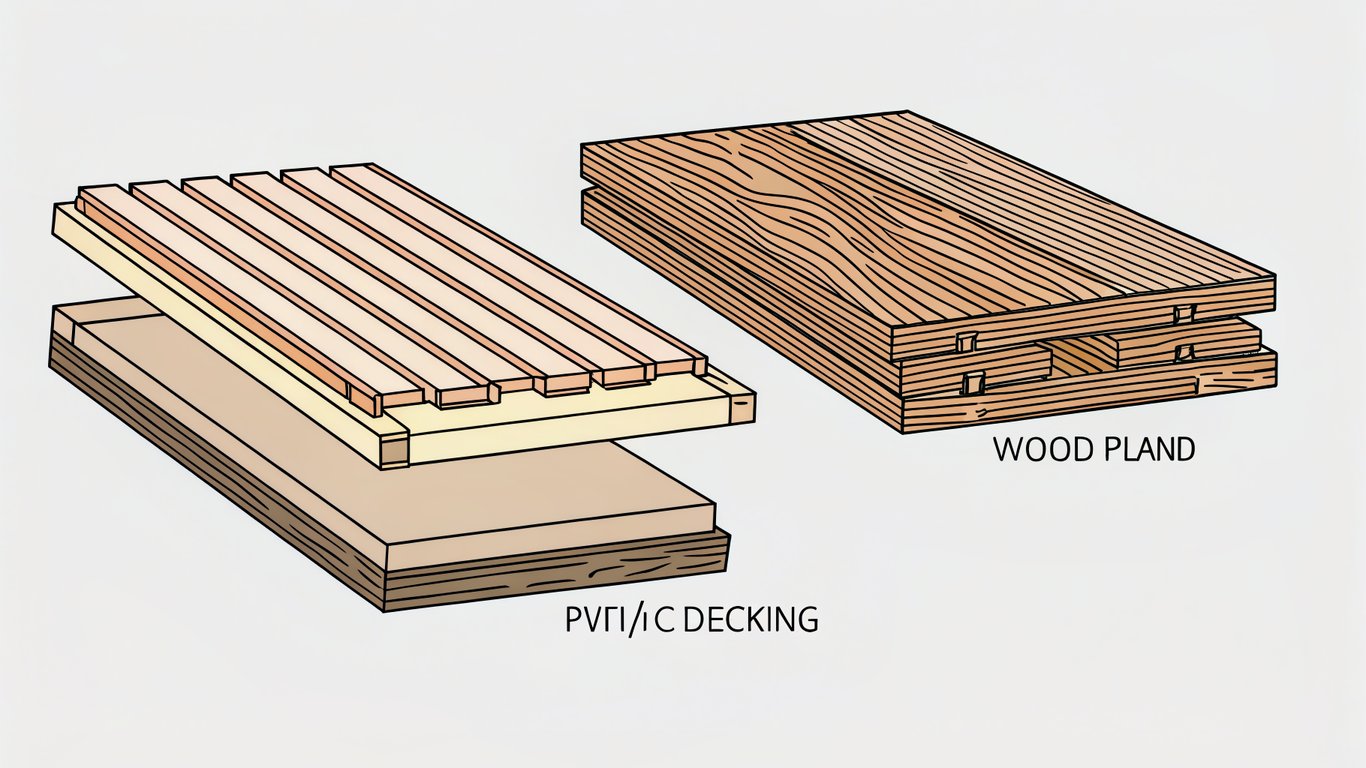
Material Costs: Comparing Your Options
| Material Type | Cost per Square Foot (CAD, 2026 QC) | Pros | Cons | Best For | |
|---|---|---|---|---|---|
| Pressure-treated wood | $3–$6 | Lowest upfront cost; widely available; easy to work with | Needs sealing or staining; can warp or crack; shorter lifespan if not maintained | Entry budgets, rental properties, simple ground-level decks | |
| Cedar | $4–$8 | Natural look and aroma; naturally rot resistant; lighter than PT | Softer wood that dents; color weathers to grey; regular maintenance needed | Homeowners who want a natural wood look and accept upkeep | |
| Composite (capped) | $5–$14 | Low maintenance; consistent color; many styles and textures | Higher upfront price; can feel warmer in full sun | Busy families wanting low upkeep; most suburban backyards | See brands: Trex, TimberTech, Fiberon |
| PVC | $8–$16 | Very low maintenance; strong moisture resistance; lightweight boards | Premium price; expansion and contraction need careful installation | Pools, lakeside, high-moisture areas | Example lineup: TimberTech Advanced PVC |
| Exotic hardwoods (Ipe, Cumaru, etc.) | $10–$20 | Extremely durable and dense; long service life; striking appearance | High material cost; heavier to install; pre-drilling usually required | Premium builds where natural wood performance matters | |
| Aluminum decking | $12–$25 (often quote-based) | Non-combustible; very low maintenance; rigid spanning; integrated drainage with some systems | Highest upfront cost for boards; specific trims and fasteners | Waterproof-over-living-space decks, docks, fire-sensitive zones | Examples: LockDry, VersaDeck |
These deck material costs reflect typical 2026 Quebec board-only pricing before tax. Your deck installation price includes a lot more than boards. Materials usually account for just 20–30% of the total project. The rest is labor, a code-compliant substructure, and the extras that make a deck safe and comfortable.
Labor Costs in Quebec: What Contractors Charge
Across Quebec, deck labor rates typically run $10–$25 per square foot. The spread reflects contractor experience, complexity, and season. Simple, ground-level rectangles with pressure-treated boards sit at the low end. Intricate layouts, picture-frame borders, curved steps, and premium materials trend higher. Spring and summer are peak season, so many crews price 15–20% higher than fall. If you want a sharper read on fair market rates in your area, get multiple written quotes. A service like Compare Deck Builders helps you line up comparable bids quickly.
- Multi-level designs and extra stairs. More framing, more staging, more inspections. Expect a noticeable bump in deck labor costs.
- Custom board patterns. Herringbone or picture-frame borders add layout time and more waste.
- Difficult site access. Long carries, steep slopes, and tight side yards slow crews down.
- Tight timelines or rush builds. Overtime or larger crews usually increase the final labor line.
Location also matters. Urban jobs with limited parking or condo logistics can add hours. Rural jobs can include extra travel time. Ask each contractor how they handle material delivery, waste disposal, and unforeseen conditions. It keeps the deck installation price clear before work begins.
Substructure and Foundation Expenses
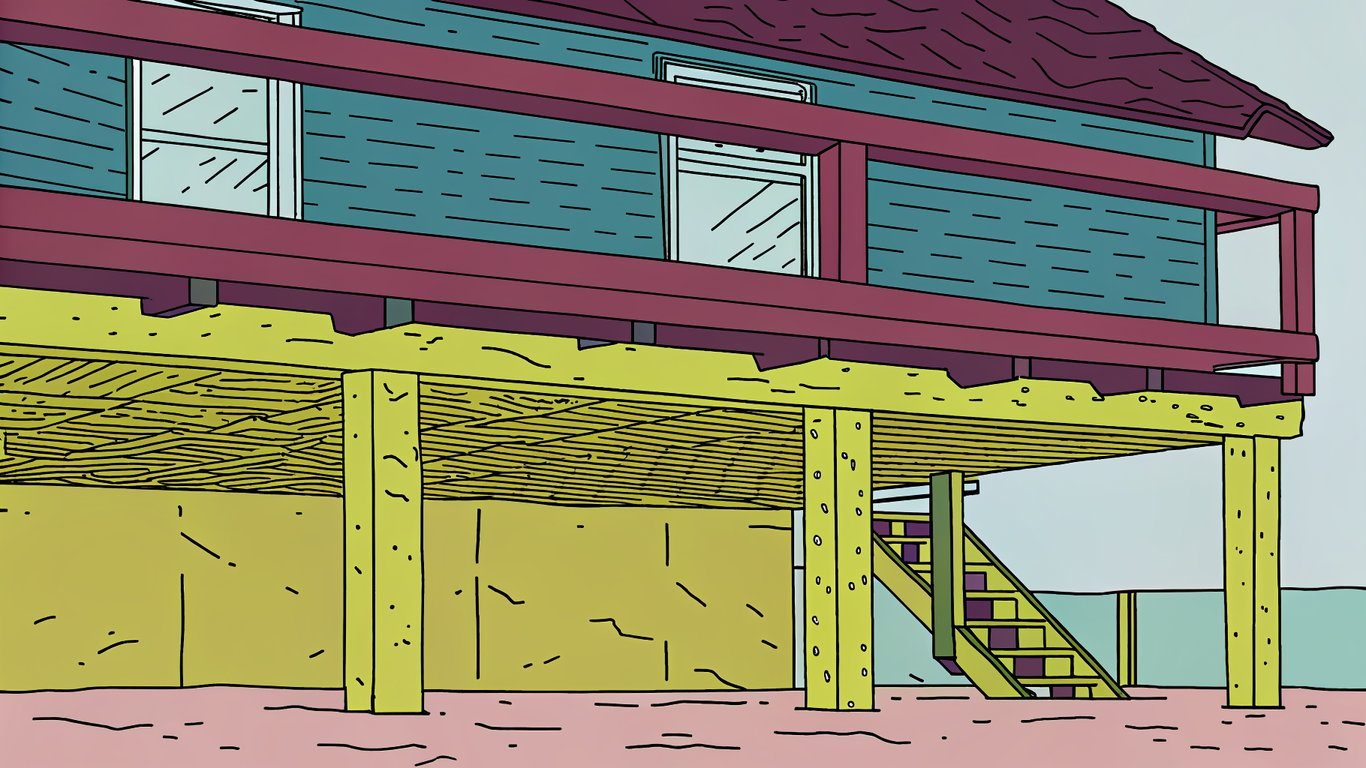
Here is the budget line that surprises most people. The substructure is the foundation, framing, and hardware that make the surface safe and code compliant. In Quebec, this usually represents 35–40% of the total. Frost depth, freeze-thaw cycles, and local code rules push builders to invest in footings, posts, beams, and connectors that last. If you are comparing quotes, look closely at this scope. A strong frame is not where you cut corners.
- Footings and posts. Concrete piers or engineered helical piles set below frost line. Good crews price layout, excavation, and pour or pile install in this line.
- Beams and joists. Sized to span safely for your material choice. Composite and PVC often need tighter joist spacing than wood.
- Ledger boards. Proper flashing and attachment to the house is critical. Water intrusion here is a common failure point if not detailed well.
- Hardware and fasteners. Structural connectors, joist hangers, corrosion-resistant screws. Coastal or pool environments often need upgraded coatings or stainless.
If a bid looks unusually low, it might be underbuilt framing or missing hardware. Ask for the framing plan, footing specs, and fastener schedule. It protects you today and at resale.
Permits, Inspections, and Hidden Costs
Most Quebec municipalities require a building permit for attached decks and any structure beyond a small threshold height. Fees vary by city and scope, but you will typically see $500–$2,000. Municipal rules reference the Quebec Construction Code that is based on the National Building Code of Canada. For permit details, check your city hall site and provincial resources like the Régie du bâtiment du Québec (RBQ). Montreal and Quebec City publish step-by-step permit pages as well. See Montreal permits and Quebec City permits for current requirements.
- Site preparation and grading. Clearing sod, leveling, gravel pads. Often $500–$3,000 depending on access and slope. Good drainage saves headaches later.
- Demolition and disposal of an old deck. Tear out, haul away, dump fees. Usually $500–$2,000, more if concrete footings are large.
- Landscaping restoration. New sod, beds, edging after construction traffic. Plan for $500–$5,000 based on yard size and finish level.
- Electrical for lighting and outlets. Licensed electrician, trenching, fixtures. Commonly $500–$2,500. Outdoor GFCI and code spacing apply.
- Water or gas lines for outdoor kitchens or heaters. Trenching, permits, licensed trades. Typically $500–$1,500 for gas and $300–$1,200 for water.
Permits are not a place to roll the dice. Unpermitted work can stall resale or trigger costly fixes. Ask how inspections are scheduled and who meets the inspector. Clarify whether permit fees and drawing preparation are included in the quote. That small admin line can swing the total more than people expect.
Big picture takeaways. Materials set the look and long-term maintenance, but they are only a slice of the pie. Labor and the substructure carry most of the weight. Timing affects the price. And a few hidden items can nudge your budget up fast. Build your numbers with that in mind and you will get a far more accurate deck construction estimate.
Deck Cost by Size and Design: From Basic to Premium Builds
Small Decks (100-200 sq ft): Budget-Friendly Options
This is the starter zone. Small decks keep materials in check and labor hours lower, which is why outdoor deck pricing here looks friendlier than you might expect. You are typically looking at a simple rectangle, ground level or a short set of stairs, and straightforward framing. In Quebec, frost and code rules still drive the substructure, so even small builds need proper footings and guards where required. That is part of why total deck building costs often surprise first timers. Estimates below include labor. They cover standard framing, decking, fasteners, and a basic railing where needed. Permit fees, taxes, complex stairs, and premium add ons are extra.
| Size | Square Footage | Pressure-Treated Cost | Composite Cost | Premium Materials Cost |
|---|---|---|---|---|
| 10×10 | 100 | $5,000-$12,000 | $8,000-$18,000 | $10,000-$22,000 |
| 10×12 | 120 | $6,000-$13,500 | $9,500-$20,000 | $12,000-$24,000 |
| 12×12 | 144 | $7,000-$15,000 | $11,000-$22,000 | $14,000-$26,000 |
| 10×20 | 200 | $12,000-$15,000 | $18,000-$25,000 | $22,000-$32,000 |
These totals line up with what we see in the field. Small decks in Quebec typically come in at $5,000-$15,000 for pressure treated and $8,000-$25,000 for composite. Premium materials here usually mean PVC or exotic hardwoods like ipe. The deck cost per square foot on a 10×10 will often look higher than on a 10×20. That is normal. Fixed costs like mobilization, footings, and inspections do not scale down perfectly on tiny projects.
Medium Decks (200-400 sq ft): The Sweet Spot
Most Quebec homeowners end up in this range. Space for a dining set plus a grill. Room to move. You also get better value per square foot because crews can work more efficiently and waste drops a bit. If you are hunting for the most balanced deck construction estimate, this is probably where it lands.
| Size | Square Footage | Pressure-Treated Cost | Composite Cost | Premium Materials Cost |
|---|---|---|---|---|
| 12×20 | 240 | $12,000-$22,000 | $18,000-$32,000 | $24,000-$42,000 |
| 14×20 | 280 | $14,000-$26,000 | $20,000-$38,000 | $28,000-$50,000 |
| 16×16 | 256 | $13,000-$24,000 | $19,000-$35,000 | $26,000-$46,000 |
| 16×20 | 320 | $16,000-$30,000 | $22,000-$45,000 | $32,000-$58,000 |
At this tier you usually see basics baked in. A code compliant railing, a simple straight stair, maybe a couple of low voltage lights on the posts. Medium decks in Quebec generally land around $10,000-$30,000 for pressure treated and $15,000-$45,000 for composite, with premium materials stretching higher. The deck cost per square foot eases downward compared to small builds thanks to economies of scale.
Large Decks (400+ sq ft): Premium Outdoor Living
| Size | Square Footage | Pressure-Treated Cost | Composite Cost | Premium Materials Cost |
|---|---|---|---|---|
| 20×20 | 400 | $20,000-$40,000 | $30,000-$65,000 | $40,000-$80,000 |
| 20×24 | 480 | $24,000-$52,000 | $36,000-$85,000 | $48,000-$100,000+ |
| 24×24 | 576 | $28,000-$60,000 | $42,000-$100,000+ | $56,000-$120,000+ |
Now we are into destination spaces. Think zones for lounging and dining, wide stairs, picture frame borders, maybe a privacy wall. This is also where multi level layouts show up along with built in seating, pergolas, and outdoor kitchen setups. In Quebec, large projects often require more structure and heavier footings which adds labor and hardware. Expect pressure treated totals around $20,000-$60,000 and composite around $30,000-$100,000+, depending on design and site access.
Design Complexity: How Features Impact Cost
- Multi level design: +25%-40% to base cost. Extra beams, posts, and stairs push both materials and labor. Check guard and stair rules in the Quebec Construction Code and Codes Canada before you plan level changes. See RBQ and Codes Canada.
- Custom railing: +$30-$80 per linear foot. Glass panels, aluminum systems, or composite sleeves cost more than basic wood pickets.
- Built in seating or planters: +$2,000-$5,000. Adds framing time and finish carpentry.
- Pergola or shade structure: +$3,000-$15,000. Freestanding aluminum or wood kits sit lower; custom integrated timber can run higher.
- Outdoor kitchen rough ins and finishes: +$5,000-$30,000. Framing for loads, weatherproof cabinets, counters, and utility runs move the needle fast.
- Lighting package: +$1,000-$5,000. Post caps and stair lights on a timer are the lower end. Integrated riser strips and smart transformers trend higher.
- Hot tub integration: +$2,000-$8,000 for framing, pads, and access. Electrical service, spa unit, and permits are separate line items.
Size matters, but complexity matters more. A simple 320 sq ft rectangle can price under a smaller multi level deck with turns and borders. That is the multi level deck cost effect in real life. When you add design layers, the deck construction estimate climbs because crews slow down and hardware counts go up. The flip side is value. Smart upgrades can stretch the usable season and boost resale. So pick features with intention.
Quick reality check on per square foot math. Bigger footprints usually deliver a lower blended rate because you spread fixed costs across more area. Smaller footprints often look expensive on a per foot basis even though the total is modest. Use the tables above as a guide for outdoor deck pricing, then add or subtract for complexity using the feature premiums. You will land much closer to an accurate Quebec total than with a one size fits all calculator.
Long-Term Deck Costs: Maintenance, Repairs, and ROI
Annual Maintenance Costs by Material Type
Upfront deck building costs get all the attention. The real story shows up in year 3, 7, and 15. Ongoing care, small fixes, and the occasional refinish can dwarf the savings from choosing a cheaper board on day one. If you are comparing wood deck vs composite cost, you need to look at total cost of ownership over 25 years, not just the sticker price. That is what smart buyers in Quebec do, especially with our freeze-thaw winters and long wet springs.
| Material | Year 1-5 Annual Cost | Year 6-15 Annual Cost | Year 16-25 Annual Cost | 25-Year Total | Maintenance Required |
|---|---|---|---|---|---|
| Pressure-Treated Wood | $500-$1,000 | $700-$1,500 | $800-$1,500 | $12,500-$37,500 | Annual wash, stain/seal every 2-3 years, spot board swaps starting around year 8-12 |
| Cedar | $400-$900 | $600-$1,200 | $700-$1,300 | $10,000-$32,500 | Gentler annual clean, stain/seal every 2-3 years, UV protection important to limit greying |
| Composite | $100-$250 | $100-$300 | $150-$300 | $2,500-$7,500 | Soap-and-water clean 1-2 times per year, fastener checks, occasional scratch or stain touch-up |
| PVC | $100-$250 | $100-$300 | $150-$300 | $2,500-$7,500 | Simple wash 1-2 times per year, hardware checks, limited color fade management |
What drives those numbers? Wood needs recurring stain or sealer plus surface prep. That usually means cleaning, sanding, and a couple coats every 2-3 years. By the time you hit a decade, you are also swapping the odd cracked or cupped board. Composite and PVC decks skip the finish work. You will clean them, check fasteners, and you might replace a single damaged board if needed. Over 25 years, composite or PVC typically costs $2,500-$7,500 to maintain. Pressure-treated can run $12,500-$37,500. That is a $10,000-$30,000 long-term swing that often outweighs the small difference in initial composite deck cost. Manufacturers publish lifecycle comparisons that show the same pattern. For example, TimberTech outlines 25-year maintenance assumptions for wood versus composite on their education pages. You can review their approach here: TimberTech composite decking cost overview.
Repair and Replacement Expenses Over Time
- Board replacement: $5-$15 per board for small spot fixes, more if many boards are affected
- Railing repair: $200-$800 depending on section length and material
- Structural repairs to joists, beams, footings: $500-$3,000 based on scope
- Refinishing or restaining: $1-$3 per sq ft including prep and coatings
- Fastener replacement or hardware upgrades: $100-$500
When do these show up? On pressure-treated and cedar, the first refinish usually lands around year 2 or 3. Minor board swaps start around years 8-12. After that, you are balancing deck renovation cost decisions like partial resurfacing versus full deck replacement cost if the substructure is tired. With composite and PVC, structural repairs are uncommon if the frame was built right to code. Most owners stick to periodic cleaning and the odd railing fix. Quebec winters are tough on rail posts and stair stringers because of frost heave. Proper footings and hardware reduce that risk a lot.
Return on Investment: What Your Deck Adds to Home Value
Well designed decks usually return a meaningful chunk of what you spend when you sell. Many industry reports and real estate pros put typical deck ROI in the 60-80% range, although results vary by market and timing. Two resources worth skimming to understand how buyers value outdoor projects: the long-running Cost vs. Value research from Remodeling magazine (Cost vs. Value) and the National Association of Realtors Remodeling Impact Report (NAR Remodeling Impact). Their exact percentages change year to year, and they cover North America broadly, so treat them as general guides. In hotter seller markets, we often see the top of that range.
- Material quality and look. Premium composite or clean cedar usually shows better than weathered pine.
- Design appeal and function. Good flow, safe stairs, and solid railings help buyers picture daily use.
- Local market conditions. Hot markets reward fresh outdoor living more.
- Deck condition. A freshly cleaned and sealed surface signals low immediate spend for the next owner.
- Integration with the home. Proportions, color, and detailing that match the house push value up.
Installation quality matters too. Strong framing, correct flashing at the ledger, and code-compliant footings protect your investment and your deck ROI. Services like Compare Deck Builders can connect you with experienced Quebec contractors so the build meets code and looks right the first time. That is the foundation for both longevity and resale value.
If you want to sanity-check code basics yourself, start with the Régie du bâtiment du Québec resources. You can browse the Construction Code here: RBQ Construction Code, and the broader Codes Canada publications page is also helpful: Codes Canada publications. Your municipality will have permit specifics, but these links give you the guardrails so you know what to ask a contractor.
Cost-Saving Strategies for Deck Owners
- Build in the off-season. Fall and winter bids often come in 10-20% lower on labor because crews are less booked.
- Keep the design simple. Straight runs, standard picture frame borders, and a single level can trim framing time by 5-15% compared with custom patterns and multiple levels.
- Handle light site prep yourself. Clearing furniture, trimming shrubs, and minor demo can save $200-$800 on small projects, more on large ones if the site is tight.
- Pick mid-grade materials. Many composite lines have a value tier that looks great and saves 10-25% versus top-end boards, without the heavy maintenance of wood.
- Get multiple quotes. Three or more detailed bids help you spot outliers and usually save 5-15% versus going with the first estimate. It also protects against scope gaps that become change orders.
- Consider phased construction. Frame and deck the main platform now. Add pergola, privacy screens, or lighting next year to spread cash flow without compromising structure.
- Maintain on schedule. A few hours each spring avoids slippery mildew and catches small problems early. Regular cleaning and timely sealing on wood can prevent $1,000-$3,000 in premature repairs and keep deck replacement cost at bay.
One more practical note. Material choice has the biggest long-term impact on your wallet. Composite and PVC usually cost more up front than pressure-treated. Over 25 years they tend to win by a mile on upkeep, often saving $10,000-$30,000 in maintenance compared with wood. If your budget is tight today, consider a smaller composite deck that you can expand later. That often beats a larger wood deck that needs regular staining plus earlier resurfacing.
Finally, make sure the build itself is right. Hire a contractor who understands Quebec frost depth, proper footing sizing, and ledger flashing to code. Poor framing leads to wobbly railings and water intrusion that balloons deck renovation cost down the road. Quality installation by an experienced crew is not just peace of mind. It is how you protect performance, minimize surprises, and keep your deck ROI healthy when it is time to sell.
Frequently Asked Questions About Deck Costs
What is the average cost to build a deck in Quebec in 2026?
Most homeowners in Quebec should plan for a total budget of $15,000-$45,000 for a typical deck in 2026. Smaller, ground-level pressure-treated builds tend to land near the low end. Larger or elevated designs with composite or PVC, long stairs, and upgraded railings move higher. Materials usually make up 20-30% of deck building costs. Labor, framing, footings, and hardware take the remaining 70-80%. Local deck builder rates and site access can swing pricing a lot. Some regions see 30-50% differences. If you want a quick gut check before getting quotes, try a trusted deck cost calculator to validate your target budget, then get itemized bids to confirm your actual deck installation price.
How much does a 12×20 deck cost?
A 12×20 deck is 240 sq ft. Materials only typically run $6,000-$12,000 depending on pressure-treated, cedar, composite, or PVC. Fully built with labor, footings, framing, railings, and stairs, expect $12,000-$30,000 in Quebec. Final price depends on elevation, number of stair runs, railing type, and any custom patterns. Composite deck cost will be higher up front, though maintenance is lighter. If you are weighing a hardscape alternative, see our patio vs deck comparison. Planning a pool surround instead? Our pool deck guide covers code and cost factors specific to pools.
Is composite decking worth the extra cost?
Often, yes. Composite usually adds 15-20% to the initial project price compared with wood. But you avoid recurring staining, sealing, and board-swapping. Over 25 years, homeowners typically save $10,000-$30,000 in maintenance compared with wood, especially in Quebec where freeze-thaw cycles are tough on lumber. That long-term gap makes the higher composite deck cost easier to stomach. You still need solid framing, proper flashing, and code-compliant footings. Those do not change. If you plan to stay in your home a decade or more, composite or PVC often pencils out better on total cost of ownership than the lower upfront deck installation price of wood.
What factors increase deck building costs the most?
Four big ones drive total price: size, materials, design complexity, and local labor. Bigger footprints and premium materials raise costs quickly. Multi-level layouts, curves, picture-frame borders, and herringbone patterns increase labor hours and waste. Expect multi-level designs to add 25-40% vs a simple single level of the same area. Railing type is another sleeper cost. Custom metal or glass can add thousands compared with basic wood or composite. Site access matters too. Tight backyards, rock, or long carries increase man-hours. Finally, regional deck builder rates vary. Busy spring and early summer schedules typically price higher than late fall.
How much do deck permits cost in Quebec?
Most Quebec municipalities charge $500-$2,000 for deck permits, depending on scope and local rules. Elevated decks, engineered drawings, or proximity to property lines can add review steps. Plan for inspection fees as well. Always check the current rules and the Construction Code with the Regie du batiment du Quebec. Start here: Regie du batiment du Quebec (RBQ). Many cities publish fee schedules and application checklists online. A good contractor will handle drawings and submissions, but you are still responsible for compliance. Budget permits and inspections as part of your core deck permit costs so there are no surprises.
Can I save money by building a deck myself?
DIY can trim 30-40% of the total if you already own tools and know the code. That savings comes from labor, not materials. The trade-off is time, risk, and liability. Mistakes with footings, ledgers, or flashing can lead to water damage and a failed inspection. You will still need permits and inspections. If you want to DIY but reduce risk, consider a hybrid. Hire pros for the substructure and ledger work. Then install decking and railing yourself. That preserves safety-critical parts while lowering your overall deck building costs. If in doubt, get a pro quote so you can compare true labor savings.
When is the cheapest time to build a deck?
Late fall and winter are usually best for pricing. Many crews offer 10-20% savings on labor when schedules are lighter. Material lead times can be better too. There are trade-offs. Ground frost and snow can slow footings and inspections, and some tasks may be staged until a thaw. Spring and early summer tend to be the most expensive because demand spikes. If you want a sharper deck installation price, start design and permitting in late summer, then book construction after peak season. You will probably get more attention from estimators as well, which makes for tighter, more accurate bids.
How do I get accurate deck cost estimates?
Provide a clear scope. Share a sketch with dimensions, elevation, stair locations, and railing type. Specify materials, fasteners, footings, and any lighting or privacy screens. Ask for an itemized quote that separates substructure, decking, railing, stairs, and permits. Use a reputable deck cost calculator to sanity-check totals, then collect at least three bids to compare deck builder rates. For faster apples-to-apples quotes in Quebec, you can request multiple contractor estimates through our quote service. And take a look at questions to ask contractors so you can vet timelines, warranties, and change-order policies before you sign.
What hidden costs should I budget for?
A few line items catch people off guard. Permits and inspections ($500-$2,000). Site prep like grading, brush removal, or rock breaking. Demolition and disposal of an old deck ($500-$2,000) depending on size and access. Landscaping repairs after construction such as sod or pavers. Electrical for lighting or outlets. Gas or water lines if you want an outdoor kitchen. Snow management during winter builds can also add labor. These do not always show up in base material quotes. Ask for a written scope and exclusions so you know what is and is not in the deck installation price before work starts.
How long does a deck last and when will I need to replace it?
Surface materials and maintenance drive lifespan. Pressure-treated wood typically lasts 10-15 years before major deck renovation cost decisions arise, especially if staining is skipped. Composite and PVC surfaces often reach 25-30+ years with basic cleaning. The frame is the backbone. If footings are deep enough and hardware is corrosion-resistant, many frames outlast the first surface by years. Some owners resurface wood decks with composite on the same frame if it passes inspection. Plan periodic inspections of ledgers, posts, and joists. Replace when you see rot, loose ledgers, heaving footings, or widespread fastener failure. Safety should decide the timeline, not just appearance.
Do I need to remove my old deck before building a new one?
If the old structure is unsound, yes. Demolition and disposal usually run $500-$2,000 depending on size and access. If the frame is solid, properly flashed, and footings meet today’s standards, you might resurface with new boards and railing. That can reduce total deck building costs. Always confirm with your municipality and the RBQ code requirements first. You will need permits and inspections either way. If you are unsure, have a pro assess the ledger, posts, beams, joists, and connections. When in doubt, rebuild the substructure. It carries the load and protects the house from moisture damage.
How can I reduce my deck building costs without sacrificing quality?
Keep the footprint simple. Rectangles are cheaper than curves. Choose mid-grade materials and standard railings. Build during the off-season for 10-20% labor savings. Limit the number of stair runs and avoid elaborate inlays that drive up waste and time. Do easy tasks yourself like light site prep or post-project landscaping. Phase non-essentials such as pergolas or lighting later. Get multiple quotes to gauge fair deck builder rates, and use this checklist when hiring: questions to ask contractors. If you want help comparing bids, request estimates through our free quote service so you can line up scope and pricing quickly.